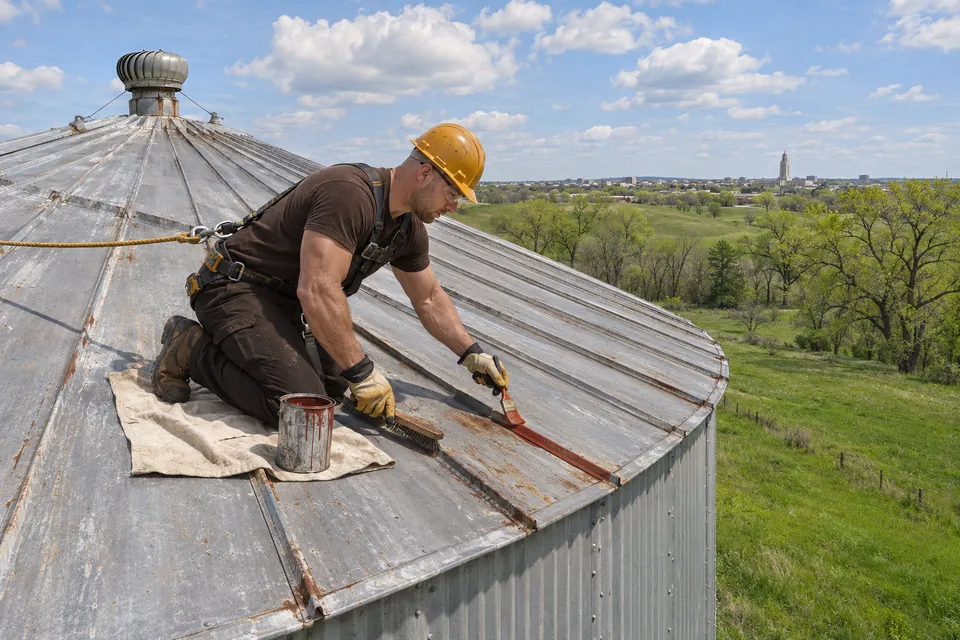
For panels without foam
Commercial Metal Roof Coating
Sections of metal roof that stay uncovered get rust treatment and lap sealing under a coating that matches the topcoat.
Lincoln commercial metal roof coating
As a Lincoln spray foam roofing contractor, we spray closed-cell foam over metal and flat commercial roofs, then protect it with a coating that keeps sunlight off the foam.
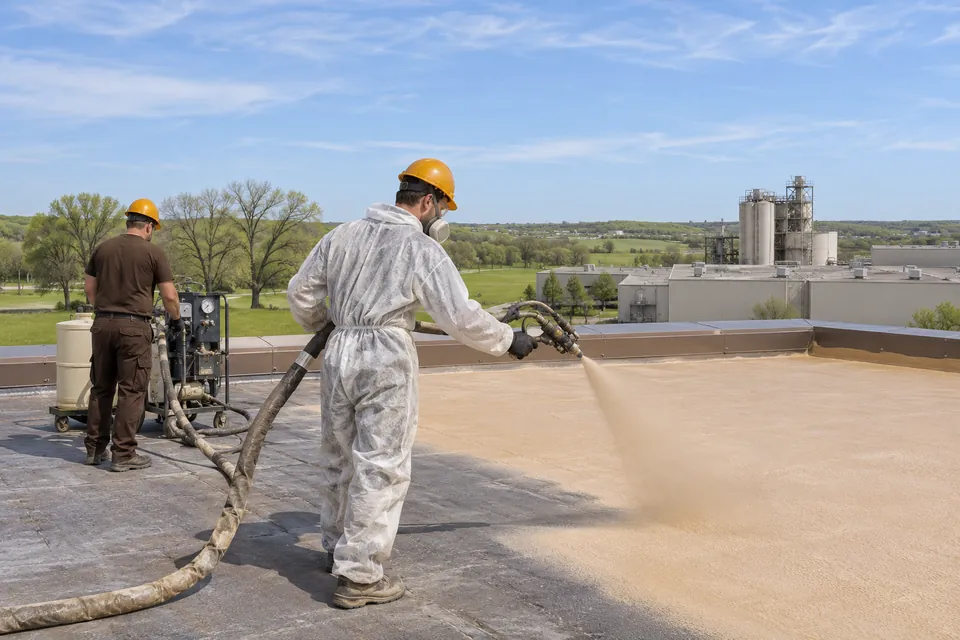
Lincoln spray foam roofing works over many existing roofs, as long as what is underneath is dry and firmly attached. Compare your roof below.
Usually fitsSometimesRarely
| Roof Condition | Foam Over Existing | Remove Wet Areas First | Coating Only |
|---|---|---|---|
| Leaking fastener rows on a cold metal shop | |||
| Flat deck with low spots between drains | |||
| Wet insulation found in a few test spots | |||
| Panels rusted through in large areas | |||
| Warm building with leaks only at laps | |||
| An older foam roof with a worn topcoat |
Foam is the right call when the building also needs insulation or slope. When it only needs leaks closed, a coating often does the job for less.
These are the roof conditions that lead Lincoln owners to foam, and the ones that need attention before it goes on.
On exposed-fastener roofs, every screw is a possible leak. Foam covers them all in one continuous layer instead of one at a time.
Thin or missing insulation under metal panels lets heat escape. Foam adds insulating value as thickness goes up.
Moisture readings that show wet areas mean those sections are cut out and dried before foam covers them.
Low areas on flat decks can be built up with tapered foam so water moves toward the drains.
Water dripping onto machinery or stock needs a temporary fix now. Call us, then plan the foam work once it is dry.
A foam roof is two parts: the foam and the topcoat that protects it. These are the combinations we price for Lincoln buildings.
| Option | Where It Fits | Prep Before It | Later Upkeep |
|---|---|---|---|
| Foam with silicone topcoat | Flat or low-slope roofs with some ponding | Clean, dry surface and secured panels | Silicone recoat when the film thins |
| Foam with acrylic topcoat | Roofs with good drainage and pitch | Same prep, checked for dryness | Acrylic recoat on a regular cycle |
| Foam recover over metal | Exposed-fastener roofs with many leak points | Wash, fastener check, rust treatment | Topcoat checks after hail |
| Tapered foam for drainage | Flat decks with water between drains | Wet areas removed, drains reset | Keep drains clear and coating intact |
Foam changes both how the roof sheds water and how the building holds heat. These are the gains Lincoln owners notice.
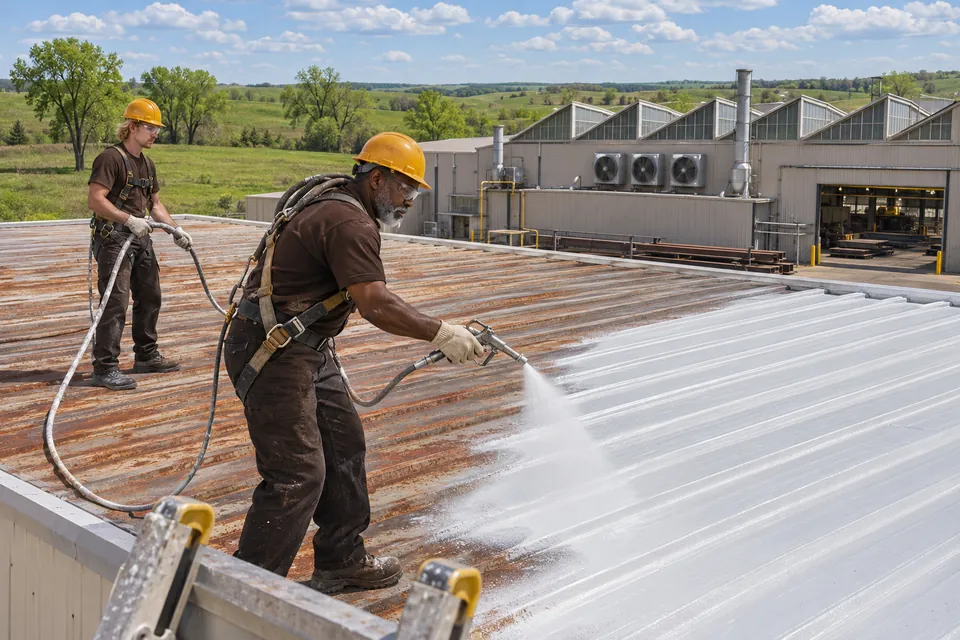
Every fastener, lap, and seam is covered at once, leaving no joints for water to find.
Closed-cell roofing foam gains insulating value with each inch, so thickness can be set to match the building's use.
Low areas can be sprayed thicker so water moves toward the drains.
In most cases the existing roof stays, so the panels and deck are not torn off.
A foam roof seals the fastener rows and adds insulation in the same job. Getting a number now helps with planning before next winter.
Foam only bonds to a clean, dry, firmly attached surface, so the early steps decide how the whole roof performs.
We walk the roof, take moisture readings and core samples where needed, check fastener hold and rust, and note every curb, vent, and drain the foam must work around.
Wet sections are cut out and replaced, rust is treated, loose screws are secured, and the roof is washed and left to dry before spraying starts.
Foam is sprayed in passes to the planned thickness, built up in low spots for drainage, with rooftop units and nearby vehicles masked against overspray.
A silicone or acrylic topcoat follows within the window the foam maker allows, at the specified thickness, so sunlight never reaches the bare foam.
Foam roofs often share a building with other coating work. These services fit alongside it.
Sections of metal roof that stay uncovered get rust treatment and lap sealing under a coating that matches the topcoat.
Lincoln commercial metal roof coating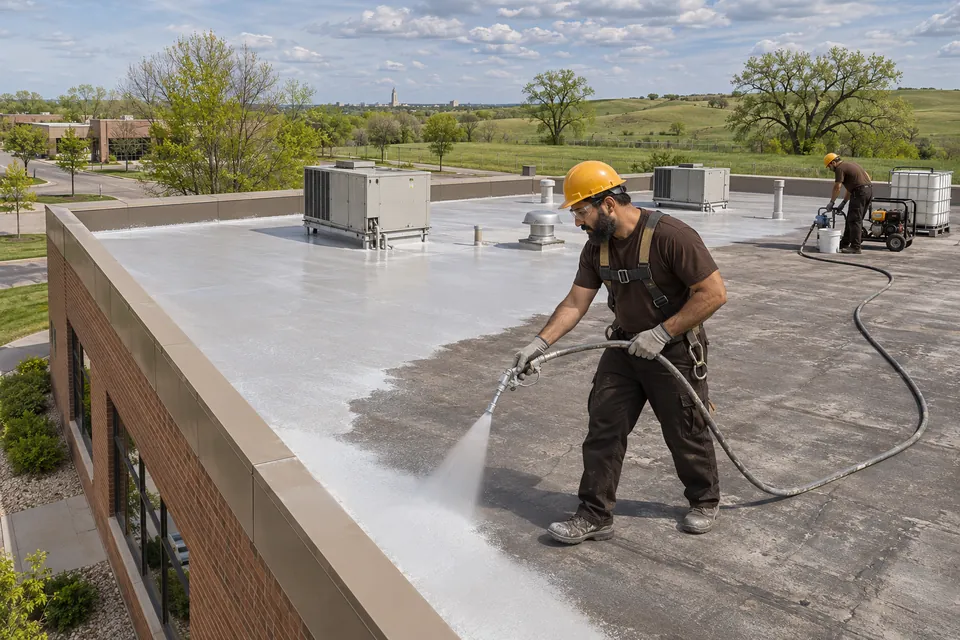
Silicone is a common foam topcoat on flatter roofs, since it holds up where water lingers.
Lincoln silicone roof coating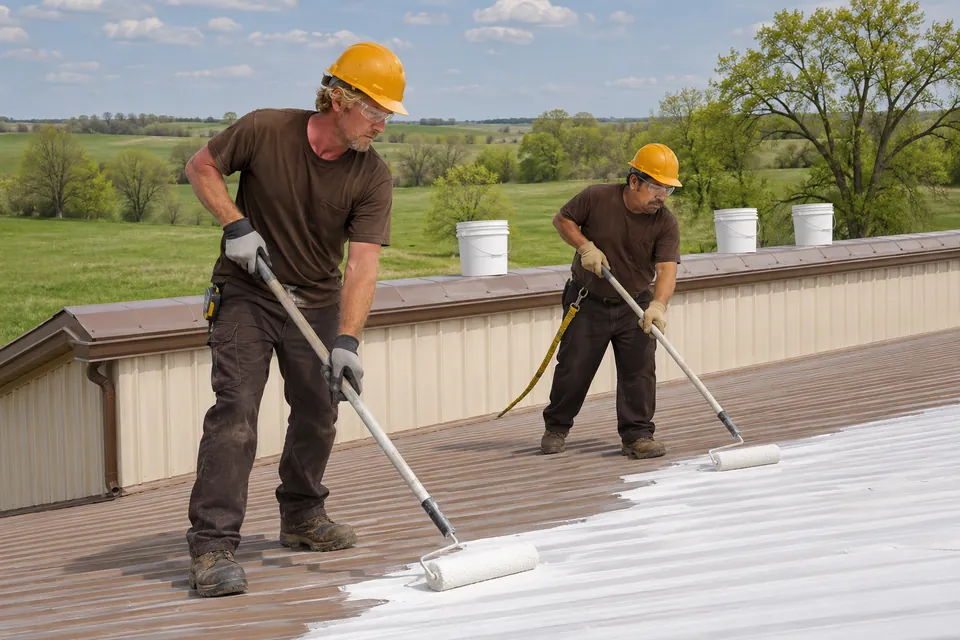
Foam roofs with good pitch can take an acrylic topcoat and later acrylic recoats.
Lincoln acrylic roof coatingWhat owners ask about foam before committing to it.
Question About Your Roof?
Call and describe the roof. We will tell you what a spray foam roofing walk looks for on it.
Call UsFoam thickness, the topcoat, and the condition of the existing roof set the price. For planning we use about $2.50 to $4.00 per square foot for coating-level work and about $5 to $8 for replacement-level work. Thicker foam, removing wet areas, and difficult access push a job higher.
It can, by covering seams, fasteners, and laps with one continuous layer. The foam fills panel ribs and bonds to cleaned metal, and a coating then protects it from sunlight. Rusted-through panels or failed structure still need repair first, so we track down each leak source before spraying.
The topcoat decides most of it. Foam breaks down in sunlight, so the coating over it has to stay intact and at the right thickness. Hail dents, foot traffic, and birds pecking open the surface. Regular inspections and recoating on schedule keep the foam itself in service.
When the topcoat has worn thin, cracked, or left foam showing. Look for chalky residue, bare yellow or brown foam, missing granules, and hail pits. We measure the remaining coating, repair damaged foam, clean the surface, and apply a new compatible topcoat.
Yes. Closed-cell roofing foam gains insulating value with every inch, so thickness can be built to meet an insulation goal or to create slope toward drains. We set the thickness during planning based on how the building is used and heated.
Enough to plan around. The National Weather Service office in Omaha/Valley recorded 27.3 inches of snow in Lincoln in 2020, 1.4 inches above normal. Drifts pile against parapets and rooftop units and melt refreezes at the eaves, so we check foam topcoats at those spots each spring.
Get a ballpark range for foam over your roof, or call and tell us how the building heats in winter.