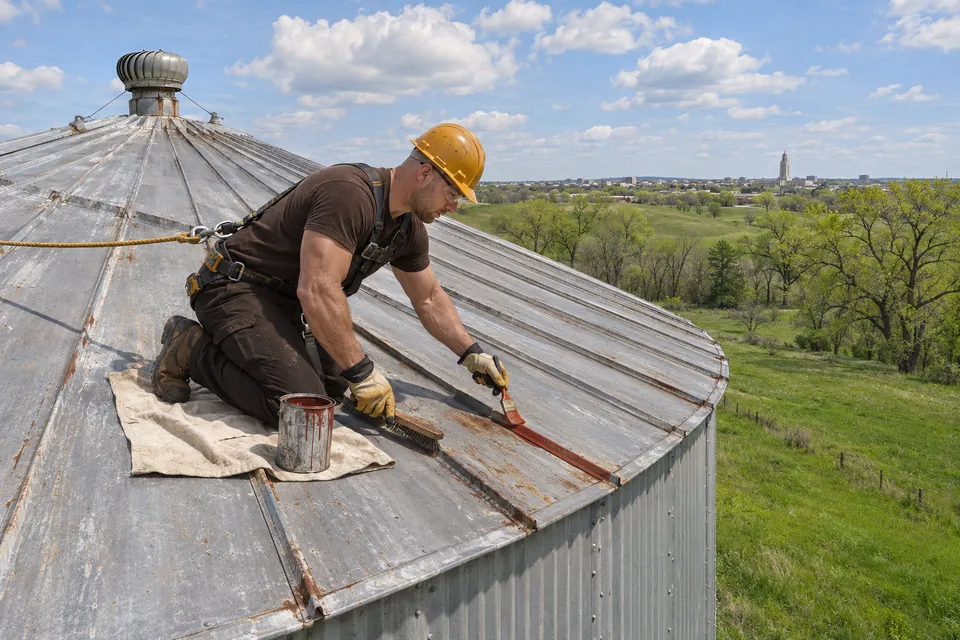
For rusted panels
Commercial Metal Roof Coating
Steeper metal sections on the same building get full rust treatment and lap sealing under a matching topcoat.
Lincoln commercial metal roof coating
As a Lincoln silicone roof coating contractor, we coat low-slope metal and older coated roofs where water lingers after storms, starting with a drain and slope check.
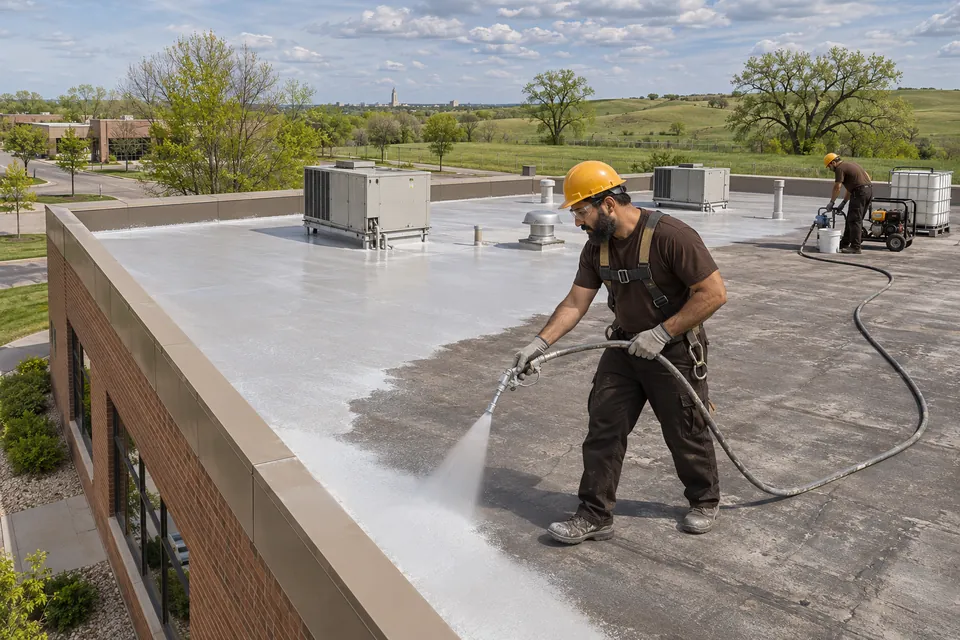
Lincoln silicone roof coating earns its place on low slopes. Compare what you see on your roof with the work that usually follows.
Usually fitsSometimesRarely
| Roof Condition | Silicone Coat | Fix Drainage First | Different System |
|---|---|---|---|
| Shallow puddles that dry within two days | |||
| Low-slope metal with surface rust at the laps | |||
| A ring of dirt where water sat around a drain | |||
| Deep ponds over a sagging section of deck | |||
| Steep panels that shed water within minutes | |||
| An old acrylic coat you plan to recoat later with acrylic |
Silicone is a strong choice where water lingers, and the walk shows whether a drain or deck repair needs to come first.
Silicone answers a specific set of problems. These are the ones we see most on low-slope Lincoln buildings.
Dirt rings show where puddles sat and dried. Silicone tolerates that standing water, so it fits these areas once the drains are clear.
Leaves, gravel, or a drain set too high keep water on the roof. The drain gets cleared or reset before any coating goes down.
Bubbled or peeling coating over red rust means the old film let go. That area is scraped, primed, and rebuilt before silicone.
Seams at the flattest part of a roof take the most standing water. They get seam sealer and an extra silicone pass.
Stains under a roof drain often mean the drain bowl or its clamping ring is leaking. Call us to find the source first.
Silicone goes on in a few different ways depending on the roof underneath. Here is how the choices compare on Lincoln buildings.
| Option | Where It Fits | What Goes Under It | Later Upkeep |
|---|---|---|---|
| High-solids single pass | Clean, sound surfaces that need moderate build | Wash and seam sealer | Silicone recoat after cleaning |
| Two-coat silicone | Roofs with more ponding or rough texture | Wash, seam sealer, first coat | Spot repairs with silicone |
| Silicone over primer on rusted metal | Low-slope steel with surface rust | Rust-inhibiting primer on treated areas | Primer stays covered by the silicone film |
| Silicone over spray foam | Foam roofs that need a topcoat | Clean, intact foam with damage repaired | Recoat before foam shows through |
Silicone's main job is staying put under water and sun. These are the gains Lincoln owners notice on low-slope roofs.
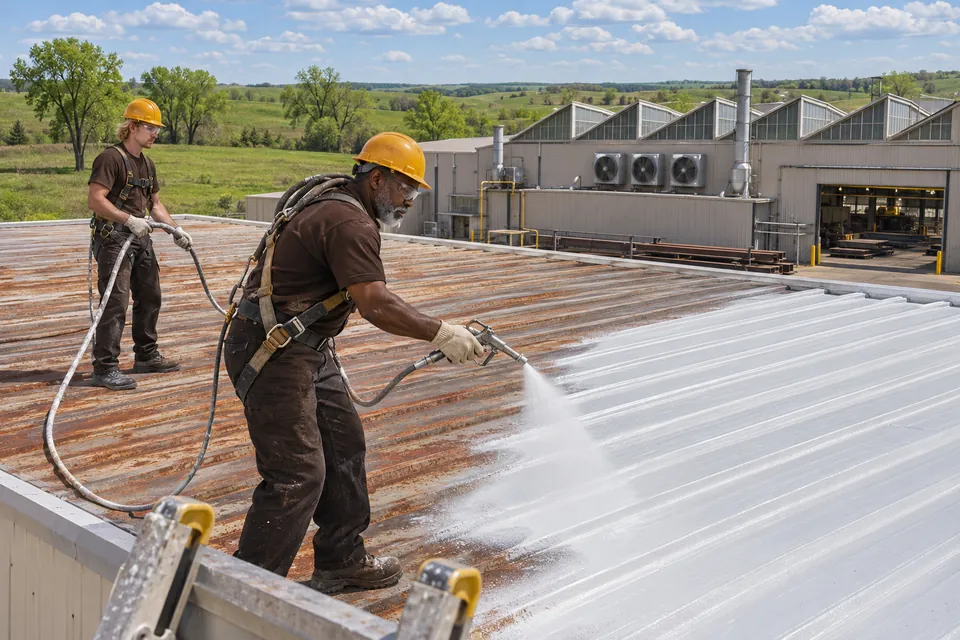
Puddles that linger after a storm leave the silicone film intact instead of softening it.
Silicone resists breakdown from UV exposure, which helps on roofs with no shade from neighboring buildings.
High-solids silicone can reach its target thickness in fewer coats than water-based systems.
Elastomeric silicone stretches as metal expands and contracts through hot afternoons and cold nights.
Puddles that last past a day show where drains or slope need help. Silicone handles the water that is left once those are fixed.
Silicone jobs start with water. Where it goes, where it stays, and why come before primer or coating decisions.
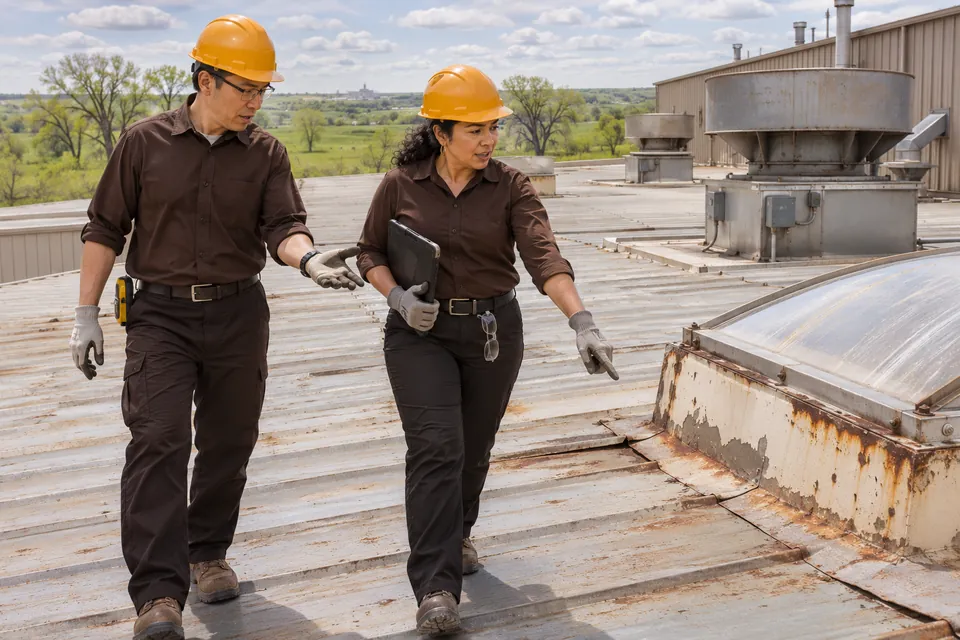
We walk the roof after rain when possible, mark every ponding area, check drains and scuppers, and probe seams and rusted laps. Moisture readings show any wet insulation under the low spots.
Drains are cleared and reset where needed. The surface is pressure washed to remove dirt, chalk, and biological growth, since silicone needs a clean surface to adhere.
Rusted steel gets rust-inhibiting primer, and other substrates get the primer the manufacturer lists for them. Seams, laps, and penetrations get seam sealer before the field coat.
Coats go on to the specified dry film thickness, checked with a wet film gauge. Ponding areas and seams get an extra pass for added build.
Silicone often shares a roof with other work. These services pair well with it.
Steeper metal sections on the same building get full rust treatment and lap sealing under a matching topcoat.
Lincoln commercial metal roof coating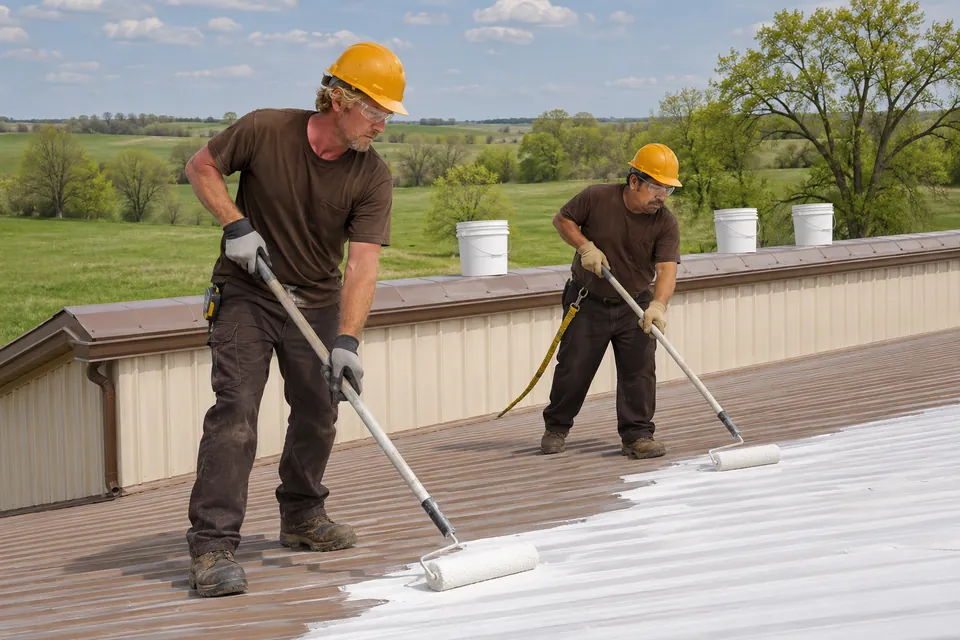
Pitched panels that drain well can take acrylic, with silicone kept to the low areas that hold water.
Lincoln acrylic roof coating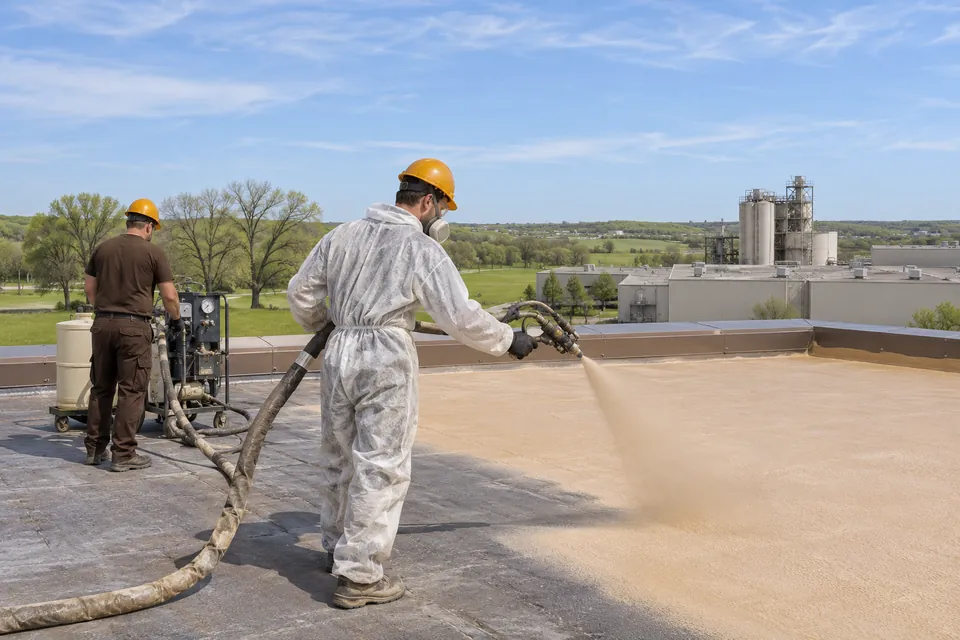
Foam can build slope toward drains on flat decks, then take a silicone topcoat over the new surface.
Lincoln spray foam roofingWhat Lincoln owners ask before choosing silicone for a low-slope roof.
Question About Your Roof?
Call and describe the roof. We will tell you what a silicone roof coating walk looks for on it.
Call UsSilicone sits inside our coating planning range of about $2.50 to $4.00 per square foot. High-solids products can reach target thickness in fewer coats, while primer on rusted steel adds cost. Roof size, seam and fastener repairs, and access move the final number.
Three stand out. Dirt clings to silicone, so a white roof darkens and reflects a little less sunlight over time. Very little besides more silicone will stick to it later, which narrows recoat choices. Silicone also turns slick when wet or frosty, so walkways near rooftop units matter.
One or two coats over primer and sealed seams is the usual answer for Lincoln metal roofs. The manufacturer's dry film thickness for that system sets the count. We check wet film with a gauge while spraying and add a second pass at seams and low spots.
Service life follows dry film thickness, surface prep, and upkeep. Manufacturers rate silicone systems by thickness, with heavier applications rated for longer service. Ponding, foot traffic around rooftop units, and hail wear the film, and regular inspections with spot repairs push a full recoat further out.
Yes, silicone resists standing water better than acrylic, which is why we choose it for low-slope Lincoln roofs where puddles linger after rain. It keeps its strength under ponding instead of softening. Large or deep ponds still point to drain or deck problems, so those get checked first.
Water that sits and freezes stresses any coating at seams and fasteners. Metal panels also expand and contract with each temperature swing. Elastomeric silicone is made to flex with that movement, and silicone laid over clean, primed metal resists the peeling that trapped ice can start.
Get a ballpark range for a silicone coat, or call and tell us where the water sits on your roof.